Design flaws, poor material selection, unsustainable projects, excessively expensive maintenance, and more. The list of architectural mistakes is long and widely known. But what happens when these failures bear the signature of the world’s most famous architects?
Let’s take a look at some emblematic cases involving star architects (or “starchitects”) that have cost thousands (or even millions) of dollars in repairs.
If it happened to them, it can happen to anyone.
Walt Disney Concert Hall, by Frank Gehry
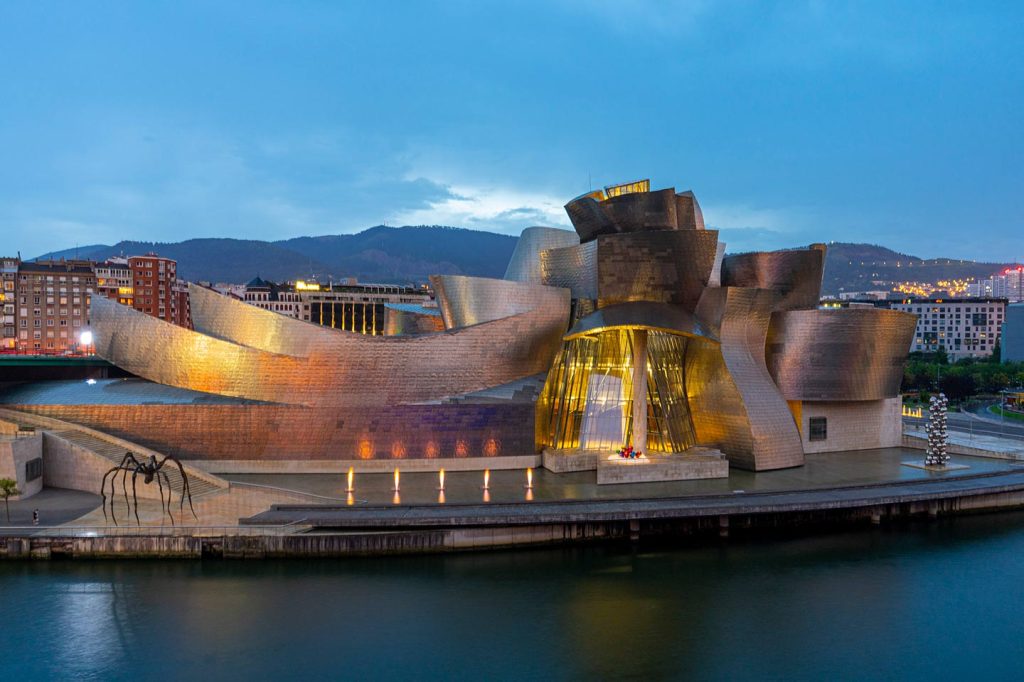
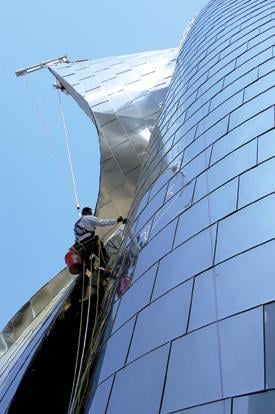
The winner of the Pritzker Prize (the “Nobel” of architecture) in 1989, Frank Gehry, has designed truly remarkable buildings such as the Guggenheim Museum Bilbao in Bilbao. And although cleaning its façade—clad in 33,000 titanium panels—was initially a headache, it ultimately became a successful project that completely revitalized the city.
What was not a success, however, was his copy similar project in Los Angeles, United States: the Walt Disney Concert Hall.
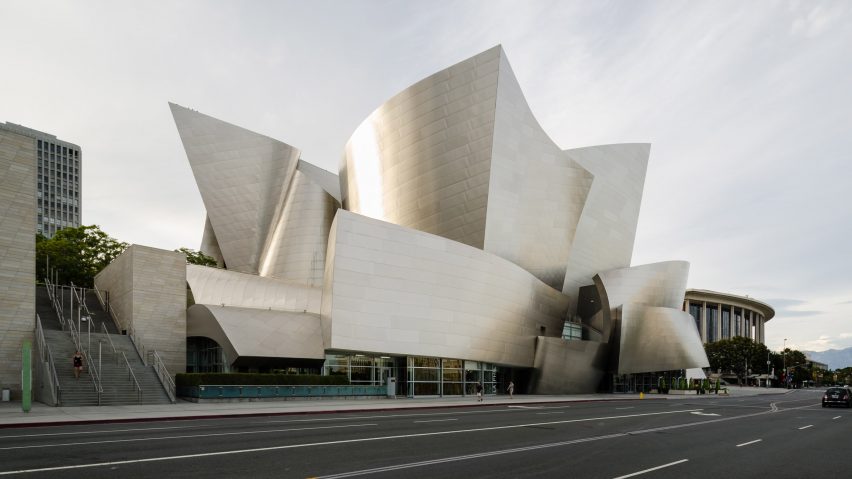
After its opening, neighbors began to complain about the reflected heat and blinding glare coming from the building’s metallic skin. There were even reports of people cooking hot dogs using the reflected heat, and of drivers being temporarily blinded by the intense glare. Nearby residential buildings also reported a noticeable increase in indoor temperatures.
The reason?
The façade included highly polished stainless steel panels in certain curved areas, which reflected and concentrated sunlight, raising temperatures throughout the surrounding area. To fix this issue, a two-step sanding process was carried out: first, vibrational sanding to dull large surfaces, followed by orbital sanding to achieve a more visually acceptable finish. Reportedly, the solution cost nearly $90,000 in 2005.
“Buildings clearly have an impact on the surrounding environment; they can shift the microclimate substantially. As more and more reflective surfaces are used, the hazard mounts. Buildings with concave surfaces are especially dangerous. Such buildings must be simulated or tested in advance to avoid significant overheating in surrounding buildings and even in outdoor public spaces, where intense heat and fire can result.” — Elizabeth Valmont, University of Southern California, 2005″1
Centre Pompidou, by Renzo Piano & Richard Rogers
Renzo Piano and Richard Rogers, winners of the Pritzker Prize in 1998 and 2007 respectively, revolutionized architecture when they won the 1971 competition for the Centre Pompidou in Paris. An iconic high-tech architecture museum that externalized its structure and systems to maximize an open, unobstructed interior space.
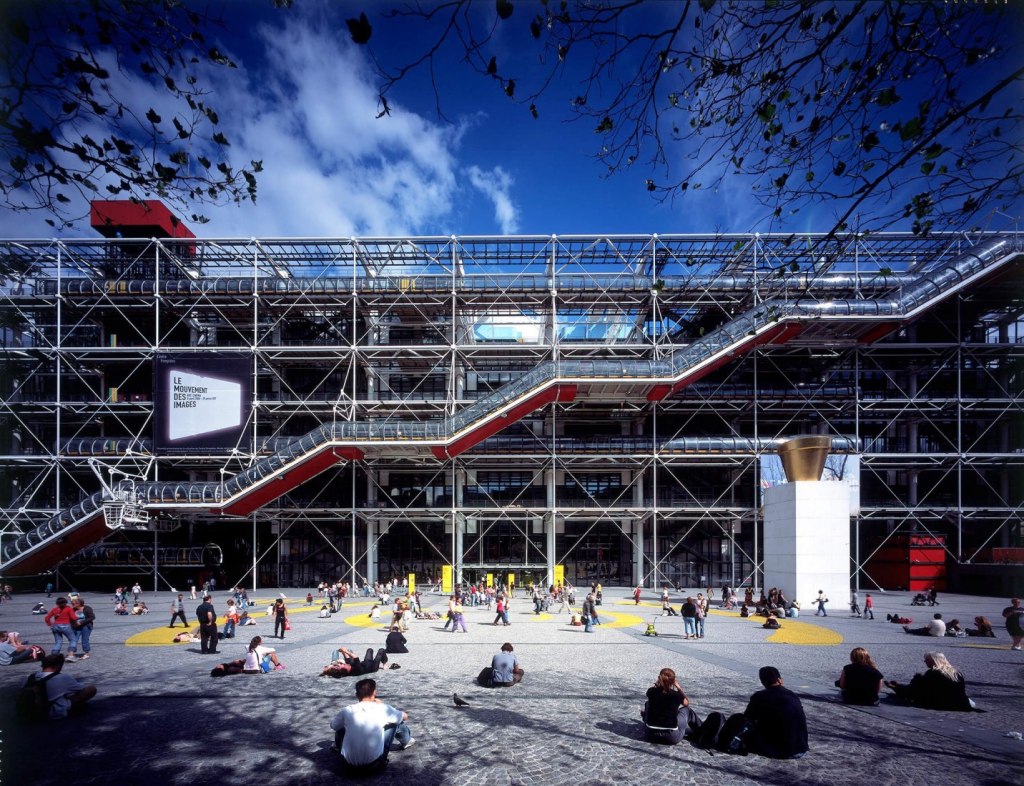
However, since its opening in 1977, maintaining the building has cost more than its original construction.
Recent reports indicate expenses of around €100 million for façade maintenance by the end of 2023, another €88 million in 1997, and an additional €19 million in 2021 to repair the iconic exterior escalators.2
Additionally, the museum will close for five years starting in 2025 for a complete renovation, including asbestos removal, replacement of piping, equipment upgrades, and more. This renovation is expected to cost €358 million and, due to various delays, an additional €200 million is estimated.3
The explanation is actually pretty simple: this is an innovative building that houses very delicate artworks, gets millions of visitors every year, and has its mechanical, electrical, and plumbing systems (MEP)—basically everything that makes the building function—exposed on the outside, along with steel structures constantly hit by weather and corrosion.
That combination means constant, specialized (and expensive) maintenance.
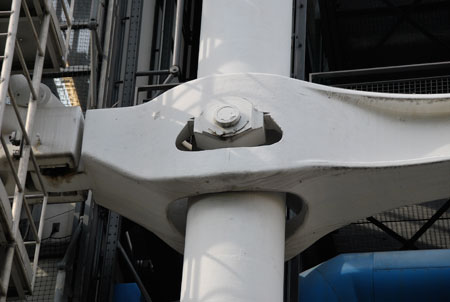
In other words, the steel structures and systems that should have been protected from environmental exposure were the most exposed. Still, the photos are stunning and no one can deny that.
But at what point does architectural discourse take precedence over a building’s actual performance?
Fallingwater, by Frank Lloyd Wright
The most famous house in the United States, designed by Frank Lloyd Wright—one of the greatest American architects—reached a cost of $155,000 in 19394 (about $3,000,000 in today’s 2024 dollars). The American Institute of Architects declared it “the best work of American architecture of all time.” Without a doubt, a true architectural gem.
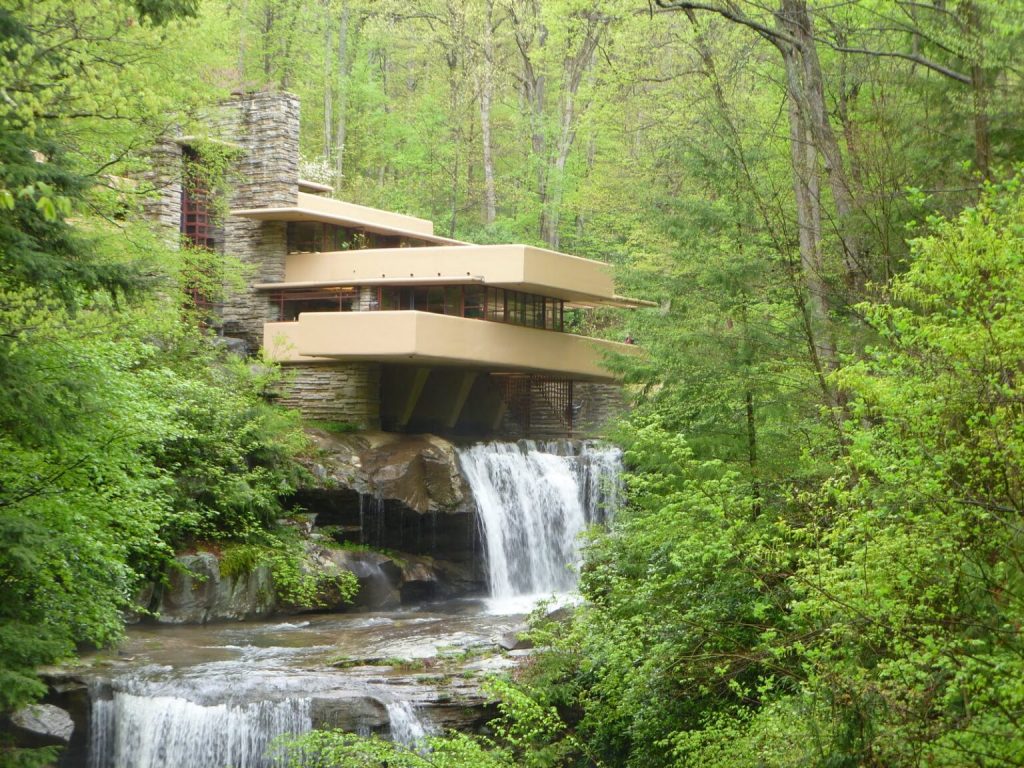
So what went wrong? A bold decision to build directly over the waterfall, combined with a flawed structural calculation.
The section facing the river started to sag. Over time, moisture seeped in, leading to mold, while the ceiling lights developed constant leaks.
Although Frank Lloyd Wright led the structural design, the project—especially the dramatic cantilevered terraces extending over the waterfall—was highly complex and required additional engineers to bring it to life in reinforced concrete.
During construction, concerns began to surface about the strength of those cantilevers. As a result, the client, Edgar Kaufmann, brought in the engineering firm Metzger-Richardson to review the design and suggest additional reinforcement. Wright, however, took this personally. He saw it as a challenge to his authority, which created tension with his client.
In the end, Wright reassured Kaufmann that “nothing serious would happen” and the project moved forward as planned.

Over time, the cantilever continued to sag and cracks began to appear, making a structural repair urgent. According to estimates made in 2001, the intervention cost more than $11,500,000 (around $20,000,000 in today’s 2024 dollars). 5
Do the math.
The truth is that by 1965, the heirs of the original residents had already decided to move out and turn the house into a museum.
Conclusions
The goal of this analysis is not to discredit the spectacular projects that have shaped modern architecture, but to broaden the conversation and bring other equally critical factors into focus.
These cases show that even the most talented and celebrated architects are not immune to mistakes or technical challenges. Their work may stand as icons of creativity and innovation, but it also reminds us that architecture should not only inspire, it must also perform. It needs to be functional, sustainable, and responsive to its environment.
And in a profession that is constantly exposed to public scrutiny, spending millions on repairs that could have been anticipated during the design phase is not a minor issue: it’s a serious one. One that deserves more attention, especially in academic settings.
Being bold and provocative may be one path to greatness, but it cannot come at the expense of technical rigor. Architecture demands a broader, more integrated approach—one that involves not only engineers, but also contractors, building managers, maintenance teams, sales advisors, insurance brokers, and everyone who will ultimately live with the building long after the design phase is over.
So, architects of the world: listen more, read more, and ask better questions, especially to those who deal with the consequences of your decisions every single day.
Fuentes:
- https://www.thoughtco.com/gehry-responds-to-concert-hall-heat-178089 ↩︎
- https://www.architectural-review.com/essays/outrage/outrage-the-cost-of-caring-for-the-pompidou ↩︎
- https://www.artnews.com/art-news/news/centre-pompidous-economic-model-is-unstable-frances-court-of-auditors-reports-1234704498/ ↩︎
- https://www.bbc.com/mundo/vert-cul-40341010 ↩︎
- https://prontubeam.com/articulos/articulos.php?Id_articulo=40 ↩︎




 Julio De la Cruz | Real Estate
Leave a comment